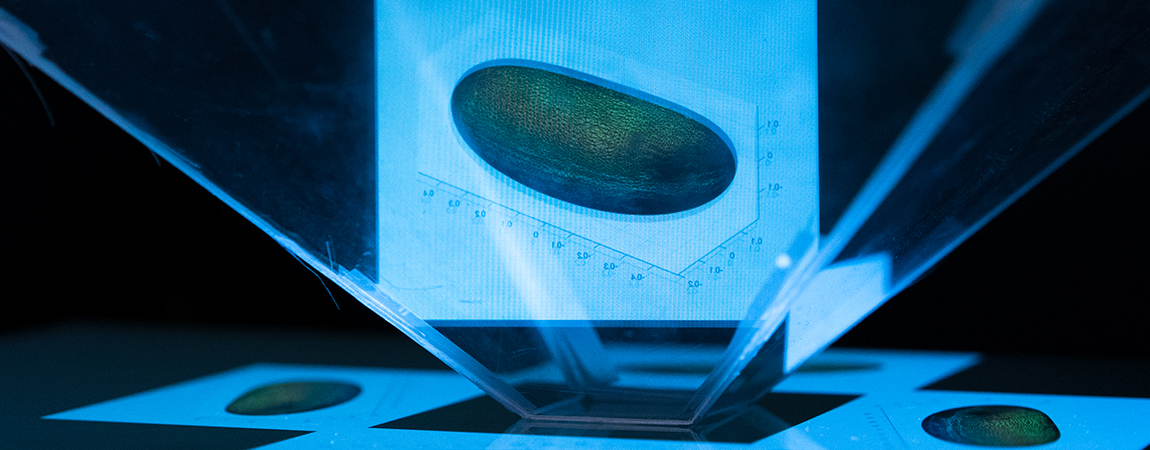
The “information age,” born in the last century, has already affected every aspect of the discipline—for example encompassing (1) representation of the physical world with computer simulation models (2) extraction and analysis of data electronically via sensors, cameras, etc. (3) prediction, actuation, control of machines using processed data and models and (4) man-machine interaction.
MEng in Mechanical Engineering
The MEng program in ME combines breadth in robotics, miniaturization, automated manufacturing, automated highway systems, biomaterials, computational mechanics, improved efficiency internal combustion engines, and the dynamics and control of both ground vehicles and aircraft. The overarching thesis of these tracks is specialized training in order to fully capitalize on the opportunities that arise in an increasingly digitized world, which blurs/blends computer simulation, sensor technologies, data analysis and machines. The associated teaching and research laboratories are among the most active, innovative and productive worldwide. The MEng technical concentrations in this department are:
-
Control of Robotic, Autonomous, and Intelligent Systems
-
Product Design
-
Aerospace Engineering
-
Digital-twins, modeling, simulation and design of multiphysical systems – from Data Centers to Drones
-
Advanced Energy Technology
-
Applied Fluids and Ocean Engineering
-
Biomechanics and Human Factors Engineering
-
Mechanics & Dynamics
-
MEMS/Nano
The descriptions are listed below for each area of concentration:
The complexity of modern robotic, autonomous, and intelligent systems has grown exponentially in the past ten years, and continues to do so. Today’s engineers are challenged by the task of building high performance machines which: (1) are safe despite the uncertainty of the environment they operate in; (2) are able to interact with humans; and (3) effectively use data, local embedded control platforms and distributed computing. You will gain experience on state of the art control systems design and implementation for such modern and highly complex systems. This concentration immerses you in the design and application of advanced controls systems, with numerous cutting edge applications such as self-driving cars, drones, aerospace systems, humanoid robotics, and robotics for manufacturing and human assistance.
Career Pathways: Careers may include systems engineering, autonomy engineering, and similar tracks. Application areas include autonomous vehicles, aviation, the aerospace industry, robotics, and broadly intelligent systems.
Coursework offerings vary year by year, and may include:
-
Mec Eng C231A – Experiential Advanced Control Design I
-
Mec Eng C231B – Experiential Advanced Control Design II
-
Mec Eng C232 – Advanced Control Systems I
-
Mec Eng 233 – Advanced Control Systems II
-
Mec Eng 235 – Design of Microprocessor-Based Mechanical Systems
-
Mec Eng 236U – Dynamics and Control of Autonomous Flight
-
Mec Eng 237 – Control of Nonlinear Dynamic Systems
-
Mec Eng 292B – Advanced Special Topics in Controls: Feedback Control of Legged Robots
-
Mec Eng 292B – Modeling and Control of Multi-Agent Systems
The Product Design concentration focuses on the methods and practice of designing engineered products, systems, and interactive technologies. Students learn to understand human, technical, and societal needs; generate and evaluate concepts; prototype and test physical and digital systems; and develop solutions that are feasible, manufacturable, sustainable, and responsive to real-world use. The concentration integrates human-centered design with computational and analytical approaches to product development, including attention to materials, fabrication, performance, safety, and lifecycle impact. Students leave prepared to translate early-stage ideas into well-developed engineering solutions.
Career Pathways: Graduates pursue roles in product development, mechanical and hardware design,manufacturing, robotics and mechatronics, computational design, technical product management, and technology-focused startups. Representative roles include Product Development Engineer, Mechanical Design Engineer, Hardware Engineer, Technical Product Manager, and Founder or Technical Lead.
Coursework offering:
-
Mec Eng 292C – Advanced Special Topics in Design
Note: The Design group regularly offers Mec Eng 292C special topics courses relevant to MEng students. These courses allow the concentration to cover emerging methods and technologies that may not yet have permanent course numbers. Recent offerings of direct relevance include “Designing with Morphing Materials and Mechanisms,” “Human-Centered Design,” and “Human-AI Design Methods.”
Additional relevant courses:
-
Mec Eng 270 – Advanced Augmentation of Human Dexterity
-
Mec Eng C278 – Advanced Designing for the Human Body
-
Mec Eng 290D – Solid Modeling and CAD/CAM Fundamentals
-
Mec Eng C223 – Polymer Engineering
-
Mec Eng C218 – Introduction to MEMS Design
-
Mec Eng C201 – Modeling and Simulation of Advanced Manufacturing Processes
-
Mec Eng 235 – Design of Microprocessor-Based Mechanical Systems
-
Mec Eng 239 – Robotic Locomotion
-
Mec Eng 290R – Topics in Manufacturing
Aerospace Engineering is in a moment of exponential growth, with particular areas including
-
Commercial Aircraft
-
Urban Air Mobility and low-altitude aviation
-
Spacecrafts
-
Military Aircraft
-
Drones
-
Satellites
-
Telecommunications
-
Supersonic flight
This track provides you with both technical and business foundations in Aerospace Engineering and their potential applications in leading edge technologies.
Career Pathways: Careers may include a variety of aerospace engineering roles, ranging from low-altitude aviation to space craft and rocketry.
Coursework offering:
Students must take at least two courses from this list:
-
Mec Eng 236U – Dynamics and Control of Autonomous Flight
-
Mec Eng 260a – Advanced Fluid Mechanics
-
Mec Eng 280A – Introduction to the Finite Element Method
-
Mec Eng 263 – Engineering Aerodynamics
-
Mec Eng 287 – Introduction to Continuum Mechanics
-
Mec Eng C231A – Experiential Advanced Control Design I
-
Mec Eng C231B – Experiential Advanced Control Design II
The remaining courses may include:
-
Mec Eng 227 – Mechanical Behavior of Composite Materials
-
Mec Eng 255 – Advanced Combustion Processes
-
Mec Eng 282 – Theory of Elasticity
-
Mec Eng 280B – Finite Element Methods in Nonlinear Continua
-
Mec Eng 284 – Nonlinear Theory of Elasticity
-
Mec Eng 289 – Theory of Shells
-
Mec Eng 245 – Oceanic and Atmospheric Waves
-
Mec Eng 260B – Advanced Fluid Mechanics II
-
Mec Eng 262 – Theory of Fluid Sheets and Fluid Jets
-
Mec Eng 266 – Geophysical and Astrophysical Fluid Dynamics
The beginning of the 21st century has seen a massive increase in computing power that has led to a subsequent renaissance in modeling, simulation, and advanced manufacturing. The rise of easy-to-use digital-twins, and computational tools in general, AI, etc. have led to an incredibly rich and exciting ecosystem that blends strong foundational theories, rapid prototyping, large-scale industrial deployment and operational methods. This has allowed engineers to rapidly create, design, develop, and market new and innovative systems-from data centers to drones. The MEng track in Digital-twins, modeling, simulation and design of multiphysical systems-from Data Centers to Drones offers students a wide array of core courses from across the world-renowned Mechanical Engineering Department, and allows the flexibility to specialize according to student’s particular interests.
Career Pathways: Careers may include a mechanical engineering roles, including simulation and digital twin engineering in many industries; robotics and automation roles; scientific software development; thermal and fluid systems engineering; and model-based design roles.
Coursework offering:
Students must take two of the following courses:
-
Mec Eng C201 – Modeling and Simulation of Advanced Manufacturing Processes
-
Mec Eng 292E with Prof. Schutzius
-
Mec Eng 244 – Modeling, simulation, and digital-twins of drone-based systems
-
Mec Eng 236U – Dynamics and Control of Autonomous Flight
Students must then take two additional courses from the Mechanical Engineering catalog.
Provides you with both technical and business foundations in energy engineering sciences and their potential applications in leading edge technologies, in fields such as advanced combustion, nanoscale energy conversion, and large scale renewable energy systems.
Coursework offerings vary year by year, and may include:
-
Mec Eng 235 – Design of Microprocessor-Based Mechanical Systems
-
Mec Eng 246 – Advanced Energy Conversion Principles
-
Mec Eng 249 – Machine Learning Tools for Modeling Energy Transport and Conversion Processes
-
Mec Eng 250A – Conductive and Radiative Transport
-
Mec Eng 250B – Convective Transport and Computational Methods
-
Mec Eng 254 – Thermodynamics
-
Mec Eng 255 – Advanced Combustion Processes
-
Mec Eng 258 – Heat Transfer with Phase Change
-
Mec Eng 259 – Microscale Thermophysics and Heat Transfer
This track provides graduates with a comprehensive foundation for careers in applied fluid dynamics or ocean engineering. Drawing on diverse faculty expertise, courses in this track spans the fundamental mechanics of stratified geophysical flows, including hydrodynamic instabilities, mixing, and upper-ocean dynamics, alongside the physical understanding of high Reynolds number multiphase flows, cavitation, and drag reduction using advanced experimental techniques like time-resolved X-ray densitometry and particle image velocimetry. These studies in environmental and multiphase fluid dynamics are seamlessly integrated with theoretical approaches to nonlinear wave mechanics, coastal wave phenomena, and fluid flow control. A central application of this combined research is modern Ocean Engineering, where graduates leverage their understanding of turbulence, multiphase systems, and nonlinear dynamics to develop sustainable ocean renewable energy technologies, optimize marine vehicle performance, and design resilient, environmentally friendly offshore structures that can safely operate in hostile marine conditions.
Career Pathways: Careers may include roles such as fluid dynamics engineers, naval architects, marine and offshore engineers, coastal engineers, and ocean renewable energy specialists. Graduates are highly sought after in a variety of sectors, including the maritime and shipping industries, defense and naval systems engineering, offshore wind and wave energy development, and environmental consulting. Furthermore, the rigorous analytical and experimental training equips students for advanced research and development positions in national laboratories, government agencies like NOAA and the Office of Naval Research, and academic careers in physical oceanography, multiphase flow, and geophysical fluid mechanics.
Coursework offerings vary year by year, and may include (blue is surely offered once a year):
-
Mec Eng 242: Ocean-Environment Mechanics
-
Mec Eng 245: Oceanic and Atmospheric Waves
-
Mec Eng 248: Experimental Methods in Single- and Multiphase Flows
-
Mec Eng 260A: Advanced Fluid Mechanics I
-
Mec Eng 260B: Advanced Fluid Mechanics II
-
Mec Eng 262: Hydrodynamic Stability and Instability
-
Mec Eng 263: Aerodynamics
-
Mec Eng 266: Geophysical Fluid Dynamics
-
Mec Eng 268: Mechanics of Offshore Systems
-
Engin 201: Ocean Engineering Seminars
The Master of Engineering (MEng) track in Biomechanics and Human Factors Engineering prepares students to develop technologies that improve human health, performance, safety, and mobility. This interdisciplinary program combines core mechanical engineering principles with applications in medicine, implantable and wearable technologies, medical devices, rehabilitation, sports engineering, ergonomics, digital health systems, and human-centered product design.
Students gain expertise in biomechanics, mechanics, materials, manufacturing, and design while learning to solve real-world challenges involving the human body and human-centered technologies. Coursework emphasizes translational engineering approaches that connect fundamental mechanics with clinical and industry applications. Through collaborative, project-based experiences, students also develop skills in leadership, communication, teamwork, and mentorship. Students are expected to complete four technical courses from the approved list below in addition to the capstone experience course.
Career Pathways: Graduates are prepared for careers in the medical device, healthcare technology, robotics, consumer products, sports technology, and biotechnology industries, as well as for advanced research and innovation roles.
Coursework offerings vary year by year, and may include:
-
Mec Eng C211 – The Cell as a Machine
-
Mec Eng C213 – Fluid Mechanics of Biological Systems
-
Mec Eng C214 – Advanced Tissue Mechanics
-
Mec Eng C216 – Molecular Biomechanics and Mechanobiology of the Cell
-
Mec Eng 224 – Mechanical Behavior of Engineering Materials
-
Mec Eng 224A – Failure Analysis of Structural Material
-
Mec Eng 226L – The Science and Engineering of Cooking
-
Mec Eng 239 – Robotic Locomotion
-
Mec Eng 270 – Advanced Augmentation of Human Dexterity
-
Mec Eng C278 – Advanced Designing for the Human Body
-
Mec Eng 289A – Introduction to the Finite Element Method
-
Mec Eng 287 – Graduate Introduction to Continuum Mechanics
-
Mec Eng 290L – Introduction to Nano-Biology
-
Mec Eng 292A – Advanced Special Topics in Bioengineering
Having its roots in the classical theory of elastic materials, solid mechanics has grown to embrace all aspects of the behavior of deformable bodies under loads. Thus, in addition to including linear elasticity, with its applications to structural materials, solid mechanics also incorporates modern nonlinear theories of highly deformable materials. This includes polymeric materials, biomaterials, and granular media. Computational methods are strongly emphasized. Dynamics is concerned with the kinematics and kinetics of bodies in motion. Linear and nonlinear vibrations are studied, both by Newtonian-Eulerian methods and by utilizing Lagrange’s equations.
Career Pathways: Careers may include stress analysis, vibrations, finite element analysis, and mechanical measurements.
Coursework offerings vary year to year, and may include:
-
Mec Eng 271: Intermediate Dynamics
-
Mec Eng 273: Oscillations in Linear Systems
-
Mec Eng 280A: Introduction to the Finite Element Method
-
Mec Eng 281: Methods of Tensor Calculus and Differential Geometry
-
Mec Eng 282: Theory of Elasticity
-
Mec Eng 283: Wave Propagation in Elastic Media
-
Mec Eng 287: Introduction to Continuum Mechanics
Over the past 20 years, the application of microelectronic technology to the fabrication of mechanical devices has revolutionized research in microsensors and microactuators. Micromachining technologies take advantage of batch processing to address the manufacturing and performance requirements of the sensor industry. This track provides you with highly interdisciplinary skills in microfabrication, MEMS design, and related topics such as microscale thermophysics, micro and nanoscale tribology, cellular and sub-cellular level transport phenomena and mechanics, and physicochemical hydrodynamics of ultra-thin fluid films.
Coursework offerings vary year by year, and may include:
-
Mec Eng 219 Introduction to MEMS (Microelectromechanical Systems)
-
Mec Eng 218N Introduction to Nanotechnology and Nanoscience
-
Mec Eng 226 Tribology
-
Mec Eng 290L Introduction to Nano-Biology
-
Mec Eng 235 Design of Microprocessor-Based Mechanical Systems
-
Mec Eng 280A Introduction to the Finite Element Method
-
Mec Eng C231A – Experiential Advanced Control Design I
-
Mec Eng C231B – Experiential Advanced Control Design II

Adapting Humanoid Robots to Aid First Responders
This team worked to enable the transition of bipedal robots between legged locomotion and wheeled transportation. Their approach was to develop a full-stack autonomous system with perception to recognize the hovershoe, trajectory optimization for precise foot placement, and a series of inner controllers to realize the trajectory.
View Capstone Project Highlight
Shreyas Bhayana, Class of 2019
Shreyas graduated from the Berkeley MEng program in 2019 with a Master’s in Mechanical Engineering and concentration in Product Design. Here he shares about his journey through the MEng program, his current work, and his advice for future students.
Read Alumni Highlight on MediumFor more information, including sample course listings, visit the Mechanical Engineering website.